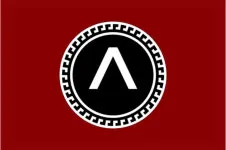
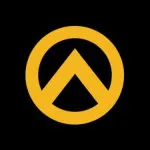
The Shield Wall Network (SWN) is a small, Arkansas-based white supremacist group that uses a Greek lambda (an upside-down V) as its symbol.
3801 Results
Back

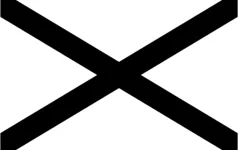
ALTERNATE NAMES: Southern Nationalist Flag, Black Cross
The League of the South is a longstanding neo-Confederate white supremacist group that advocates for a white-dominated, independent South. It originated in the mid-1990s as an organization that typically employed coded racism but took a sharp turn into explicit white supremacy and anti-Semitism in the 2010s.
The logo of the League of the South is the so-called “Southern Nationalist Flag,” created in 2013 by a League member. The design features a black cross—meant to resemble the St. Andrew’s Cross on the Confederate flag—against a white background.
A League-associated social media page claims that the color white in the flag stands for “European heritage, hierarchy, tradition,” while the black stands for “nationalism.” It also claims that “the ‘X’ shape…recalls the Roman numeral X (10), which in French is written as ‘dix,’ as in ‘Dixie.’”
The flag design has been adapted to fit shields, banners, lapel pins and other forms of display. Because some websites now sell versions of the flag as a “Southern Nationalist” flag rather than specifically a League flag, its usage may extend beyond strictly League members.
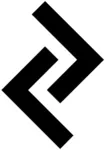
ALTERNATE NAMES: Jeran Rune
The Jera rune is an ancient European runic symbol, part of the runic alphabet. It also symbolizes concepts such as the harvest or the passage of time.
German ultranationalists of the pre-Nazi period began appropriating various runic symbols to help them create a link to a mythic “Aryan” past; from the 1920s through the 1940s, the Nazi party took such runic appropriation to a new level, incorporating many runic designs into Nazi iconography and symbology. Because the Nazis had done so, later neo-Nazi groups continued the tradition, adopting various runic symbols as logos, including symbols the Nazis themselves did not use.
The Jera rune is one of the less common runic symbols appropriated by modern white supremacists, perhaps because the Nazis do not appear to have used it. In the 2010s, however, white supremacists in Europe and the United States began to use the symbol. In Sweden, for example, the National Youth League (Förbundet Nationell Ungdom), a neo-Nazi group, adopted the Jera rune as its logo. In the United States, the rune began to appear on flyers and cards associated with the alt right segment of the white supremacist movement.
Some white supremacists may use the symbol because its design can conjure the image of a swastika without the symbol actually being a swastika.
Because the Jera rune is used by non-racists as well, including by adherents of modern pagan religions such as Asatru, one should not assume use of the symbol is racist but instead should only judge the symbol carefully in its specific context.




ALTERNATE NAMES: Jew Face, Merchant Face, Le Happy Merchant
The “Happy Merchant” is an antisemitic meme depicting a drawing of a Jewish man with heavily stereotyped facial features who is greedily rubbing his hands together. The meme is by far the most popular antisemitic meme among white supremacists, who have created a nearly endless series of images and variants featuring the “Happy Merchant.”
The meme originated with pen-and-ink artwork by a racist cartoonist who used the pseudonym “A. Wyatt Mann,” exposed by Buzzfeed reporter Joseph Bernstein in 2015 as actually being artist Nick Bougas (allegations of Bougas’ authorship had long predated Bernstein’s article). Mann became known for his grotesquely racist and antisemitic cartoons in the 1980s and 1990s, many of which first appeared in newsletters published by longtime white supremacist Tom Metzger.
The original cartoon featured the Happy Merchant image and a similarly bigoted drawing of an African American, as well as images of a rat and a cockroach. The cartoon contained a racist assertion that substituted the images for certain words to read: “A world without [Jews] and [blacks] would be like a world without [rats] and [cockroaches].” According to the Australian non-profit Online Hate Prevention Institute, this cartoon appeared on Metzger’s website at least as early as 2004 (its first appearance in print was likely earlier).
At some point—Bernstein suggests as early as 2001—someone cropped out all but the Jewish man from the cartoon and uploaded it to the Internet, where it became particularly popular on forums such as 4chan, whose users began modifying and spreading it. It eventually gained the name “Happy Merchant.” It has also been called “Le Happy Merchant,” “Merchant Face” and “Jew Face.”
The Happy Merchant has become nearly ubiquitous in modern online white supremacist and antisemitic iconography. A 2018 study by scholars examining memes displayed in various online communities determined that the Happy Merchant was among the most popular memes on both 4chan and Gab, two major online outlets for alt right expression.

ALTERNATE NAMES: GTK
GTKRWN (also GTK RWN) is a white supremacist acronym for the racist and antisemitic slogan “Gas the Kikes; Race War Now.” Occasionally, white supremacists may only use the first part of the acronym: GTK. The slogan appears to have been created around 2014 and is most associated with the alt right and neo-Nazi segments of the white supremacist movement.
The phrase is used as a “call to action” slogan by some white supremacists, but some others use the acronym to describe a certain portion of the white supremacist movement itself. In this latter context, the acronym is typically used as a somewhat negative reference to less sophisticated and more headstrong, outspoken or crudely violent white supremacists. For example, one 8Chan user admiringly posted in June 2018 about people able understand Nazism “beyond GTKRWN and Hitler pictures.”
